
Why Is a Home Caretaker Important for Patients? Their Role, Responsibilities, and Training Explained
In today’s fast-paced world, many patients require continuous care even after being discharged from the hospital. For most families, it is not always possible to stay with the patient 24/7 and provide constant support. This is where a Home Caretaker becomes extremely important.
A home caretaker provides essential support and assistance to patients in the comfort of their own homes, ensuring proper care, safety, and faster recovery.
What Is a Home Caretaker?
A home caretaker is a trained individual who assists patients with their daily needs and basic healthcare support at home. These services are especially helpful for patients who are:
Elderly and unable to move independently
Recovering after surgery
Paralysis patients
Bedridden patients
Patients suffering from Dementia or Alzheimer’s disease
Accident recovery patients requiring long-term support
Cancer patients or critically ill patients needing continuous care
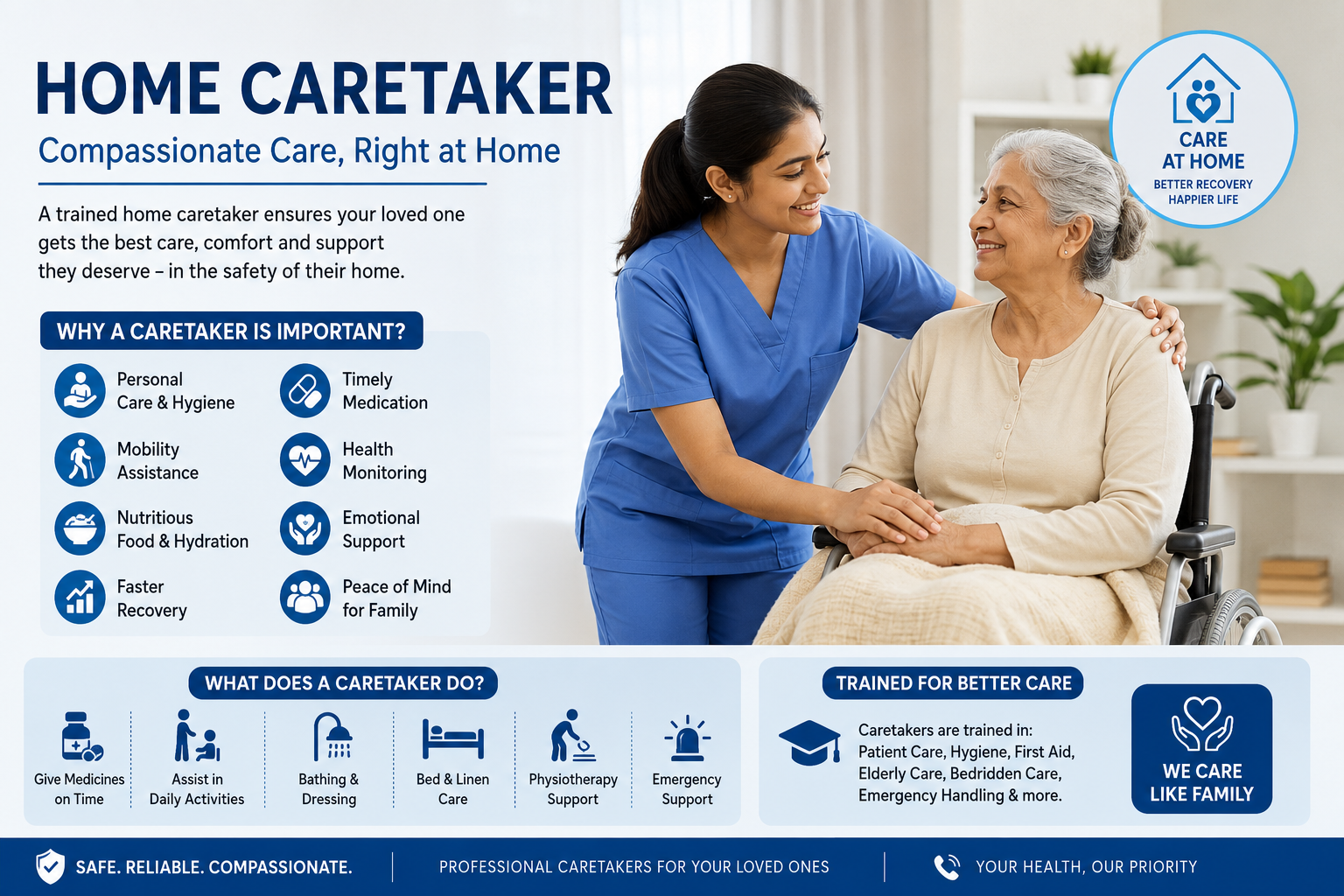
Why Is a Home Caretaker Important for Patients?
1. Continuous Monitoring and Supervision
Some patients require constant observation throughout the day and night. A caretaker ensures the patient remains safe and properly monitored at all times.
2. Timely Medication Management
Patients often have multiple medications scheduled at different times. A caretaker helps ensure medicines are given correctly and on time.
3. Maintaining Personal Hygiene
A caretaker assists patients with bathing, changing clothes, grooming, and maintaining proper hygiene, which is essential for overall health.
4. Special Care for Bedridden Patients
Patients who remain in bed for long periods require regular position changes to prevent bedsores and discomfort. Caretakers help manage this properly.
5. Mobility Assistance
Weak or recovering patients often need support while walking, sitting, standing, or moving with the help of a wheelchair or walking support.
6. Reduces Family Stress
Family members often have work and personal responsibilities that make full-time patient care difficult. A caretaker gives families confidence that their loved one is receiving proper care.
7. Hospital-Level Support at Home
Patients usually recover better in a comfortable home environment. A trained caretaker helps provide professional support without requiring a hospital stay.
What Does a Home Caretaker Do?
A trained caretaker is responsible for several important daily tasks, including:
Giving medicines on time
Helping the patient eat and stay hydrated
Monitoring basic health parameters such as blood pressure, pulse, and temperature
Assisting with bathing and personal hygiene
Changing diapers when needed
Helping transfer patients from bed to wheelchair or chair
Supporting physiotherapy exercises or mobility exercises
Assisting with toilet and washroom needs
Following doctor instructions carefully
Informing family members immediately during emergencies
Where Are Home Caretakers Trained?
Professional caretakers undergo proper training before working with patients. Their training generally takes place in the following institutions:
1. Nursing Institutes
They learn patient handling, elderly care, hygiene management, and basic caregiving skills.
2. Hospital-Based Training Programs
Many hospitals train healthcare assistants and patient attendants in real clinical environments.
3. Home Healthcare Organizations
Professional home healthcare companies provide specialized practical training for caretakers before deployment.
4. Skill Development Programs
Various government and private institutions offer courses for healthcare assistants and patient attendants.
Skills Every Good Caretaker Should Have
A professional caretaker should possess:
Patience and empathy toward patients
Knowledge of hygiene and cleanliness
Basic healthcare and medical awareness
Emergency handling ability
Good communication skills
Knowledge of elderly care
Bedridden patient handling skills
Respectful and compassionate behavior
Conclusion
When a patient requires long-term care, a Home Caretaker becomes an essential part of the recovery process. Proper care at home improves comfort, speeds up recovery, and reduces the burden on family members.
A trained caretaker does more than simply assist a patient — they provide comfort, safety, and peace of mind to the entire family.
“Professional care at home brings hospital-level support, comfort, and better recovery where patients feel safest — in their own home.”